Deep Logic Behind Double Squeeze from Supply Chain and Valuation: Apple Price Hikes and SpaceX Stock Decline
Keywords: Apple price hikes, memory shortage, SpaceX stock decline, high-valuation divergence, supply chain crisis
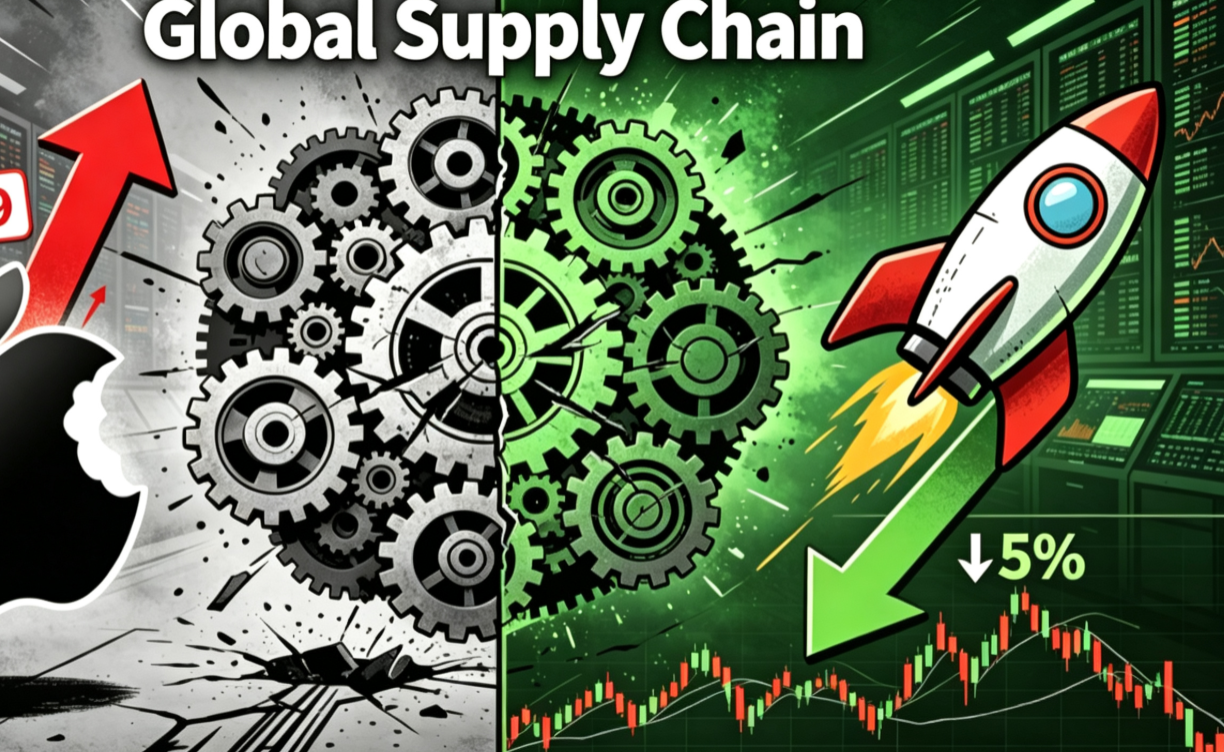
Recently, two major events have hit the global tech sector: Apple significantly raised prices on many Mac and iPad products by up to 20% due to memory shortages, while SpaceX stock experienced a notable decline as the market diverged over its persistently high valuation. These events appear to belong to different tracks—consumer electronics and commercial aerospace—but they both reflect the deep challenges facing the global tech industry: irreversible supply chain bottlenecks and growing skepticism from capital markets toward high-growth narratives.
I. Apple Price Hikes: Ripple Effects from Memory Shortages
Apple's price hike is not an isolated market strategy adjustment but an inevitable result of the ongoing global semiconductor supply chain crisis. Since the COVID-19 pandemic began in 2020, global chip production capacity has remained in tight balance. DRAM and NAND flash memory, as core components of Macs and iPads, have seen increasingly acute supply gaps. This round of price adjustments covers major models including MacBook Air, MacBook Pro, iPad Air, and iPad Pro, with increases ranging from 10% to 20%, representing Apple's largest price hike across its product line in recent years.
From a cost transmission perspective, Apple's price increase is by no means a simple "price markup." Upstream memory chip makers such as Samsung and SK Hynix have raised contract prices for several consecutive quarters. Although factory utilization rates remain high, new fab ramp-up cycles take 18 to 24 months, making short-term supply-demand imbalances difficult to resolve. Apple, as one of the global largest buyers of memory chips, wields strong bargaining power, but faced with across-the-board price increases across the entire supply chain, it ultimately has to pass some costs on to end consumers. Notably, Apple's price hike targets not all product lines but specifically the Pro series and high-end models with higher memory requirements, reflecting significant differences in how various configurations are impacted by supply constraints.
On a deeper level, Apple's price increase will set a precedent for the consumer electronics industry. If the memory shortage does not significantly ease before the second half of 2025, other PC and tablet makers are likely to follow suit, triggering a supply-driven wave of price hikes. For consumers, this means that the threshold for purchasing high-end electronic devices will rise further in the foreseeable future.
II. SpaceX Stock Decline: High-Valuation Narrative Meets Reality
Unlike Apple's real supply chain pressure, SpaceX's stock decline reflects a reassessment by capital markets of the "asset-heavy + long-cycle" business model. As the world's most valuable private tech company, SpaceX's valuation exceeded $300 billion by the end of 2024, far surpassing traditional aerospace giants like Boeing and Airbus. However, since early 2025, its secondary market trading price has fallen about 15% to 20%, with market divergence intensifying.
The core reason for the valuation divergence lies in the tension between SpaceX's profit model and cash flow. On one hand, its Starlink satellite internet business has achieved positive cash flow and begun to generate stable revenue. On the other hand, the R&D investment in the Starship super-heavy rocket remains enormous, and explosions and delays during test flights have raised the technology risk premium. More importantly, as the low-Earth-orbit satellite internet track becomes increasingly crowded—with Amazon Kuiper and China StarNet among competitors accelerating—Starlink's exclusive advantage is being diluted. Some investors have begun to question: even if Starship eventually achieves full reusability, can its commercial return cycle support such a high valuation multiple?
In addition, changes in the macro environment have amplified the market correction of SpaceX's valuation. Uncertainty over the Fed's monetary policy direction, geopolitical risks affecting commercial aerospace insurance and export controls, and the continued blurring of the IPO window have driven capital out of high-risk growth assets. For a "capital-intensive + long-term loss" enterprise like SpaceX, market patience is being gradually exhausted.
III. Structural Divergence: Dual Test of Supply Chain and Valuation
Examining Apple and SpaceX's dynamics under the same analytical framework reveals a common trend: the "golden age" of the tech industry is facing structural divergence. Consumer electronics companies relying on mature supply chains are constrained by physical capacity bottlenecks, while aerospace companies relying on cutting-edge technological breakthroughs and capital injections face the harsh scrutiny of financial markets. Together, they highlight a basic fact—when tech innovation enters the "tough nut" stage, both cost control and valuation logic must return to a more pragmatic foundation.
From the perspective of investors and consumers, Apple's price hikes force consumers to rethink their replacement cycles, while SpaceX's stock decline reminds risk investors that even the most visionary track cannot forever detach from fundamentals. In the next six to twelve months, whether memory supply improves with new capacity releases and whether Starship's commercialization progress matches market expectations will be key variables determining trends in these two fields.
Conclusion: An Era of Rational Return
The stories of Apple and SpaceX are essentially two sides of the same coin. Physical supply chain constraints and the rational return of financial markets are together correcting the excessive optimism accumulated in the tech industry over the past few years. For Apple, price hikes can ease profit pressure in the short term, but in the long run, it must reduce reliance on external suppliers through vertical integration or technological substitution. For SpaceX, the stock pullback is not a disaster but perhaps a necessary path to squeeze out bubbles and attract long-term capital. In an uncertain market environment, the only certainty is that tech companies capable of simultaneously navigating technological risks and business fundamentals will truly ride out the cycles.